(*not full title)
Accepted at ICoRD 2027 at IISc Bangalore, currently under review.


TEAM
Samidha Awatepujari
Apurva Bhure
01. At a glance
This research paper investigates the cognitive ergonomics of touch typing on 3 types of tablet screen keyboard layouts, and explores how predictive AI assistance on the keyboard strip actually fits into a user's workflow.
The following case study is only a high-level overview of our work, since exact publication details (title, methodology, findings, etc.) are sensitive and cannot be shared.
02. Our questions
This research was meant to explore:
1. The Evolution of Tablet keyboards: How they carry skeuomorphism from laptop and mobile keyboards.
2. The Layout of Tablet keyboards: A quantitative and qualitative comparison between the 3 dominant layouts (Docked, Split, and Floating).
3. The efficiency and usage of AI Suggestion strips, and the perceived authorship users feel upon it's use.
03. The approach
Because this problem spans both physical interaction and mental processing, we analyzed it over 3 phases:
Phase 1: Analyzing the layouts and the AI strip using prominent UX methods to benchmark our understanding.
Phase 2: Experimental tasks, involving ~6 typing tasks across various spatial keyboard arrangements that helped measure efficiency, cognitive load, etc., followed by qualitative interviews.
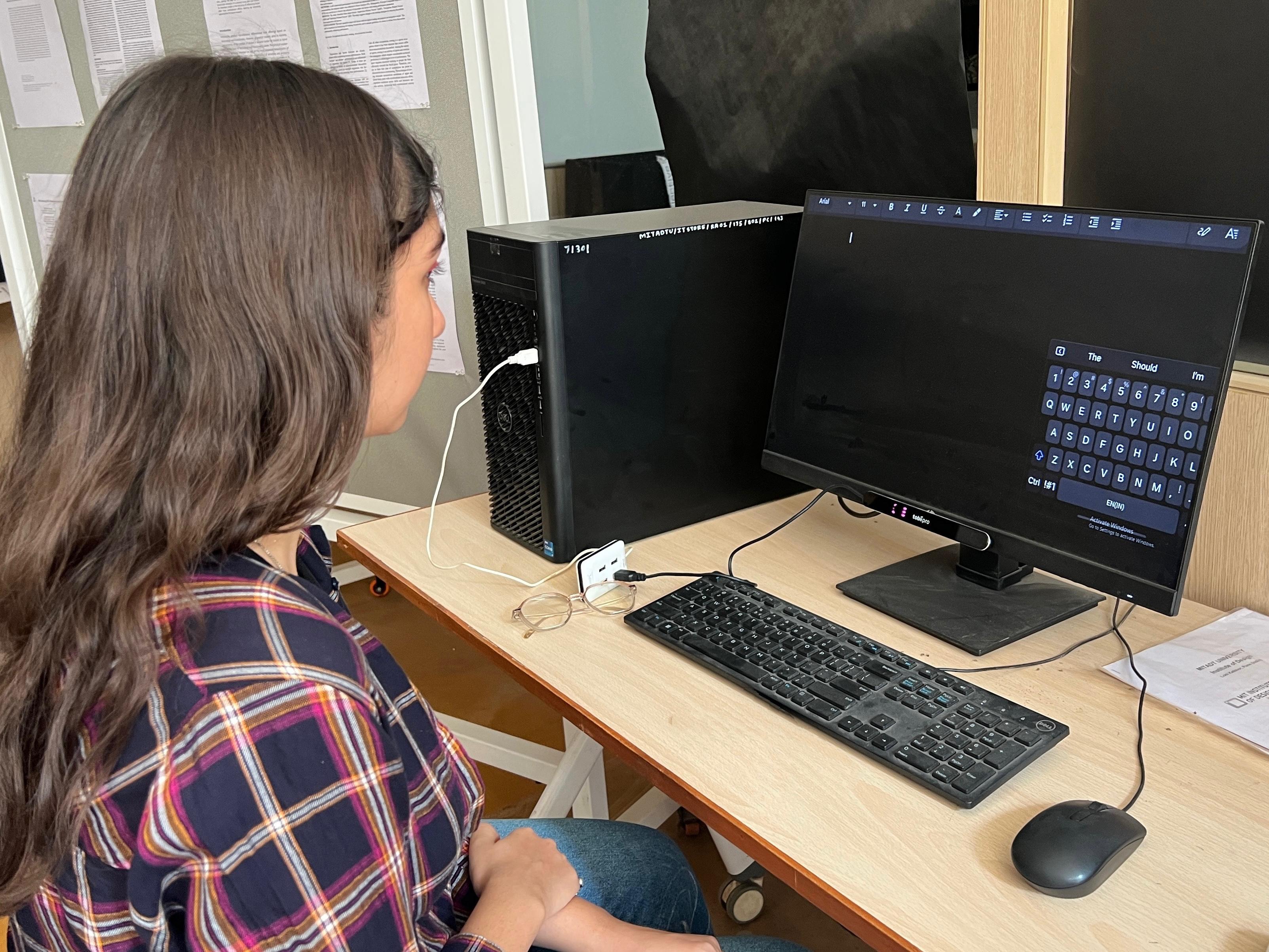
Phase 3: Eye-tracking on a Tobii Nano Pro, to capture eye movement behavior to see where visual attention naturally anchors and how gaze path shifts when predictive AI suggestions appear on the screen.
04. What's next
We're currently working on improvements as suggested in the first round, and looking out for our conference presentation date in early January!